
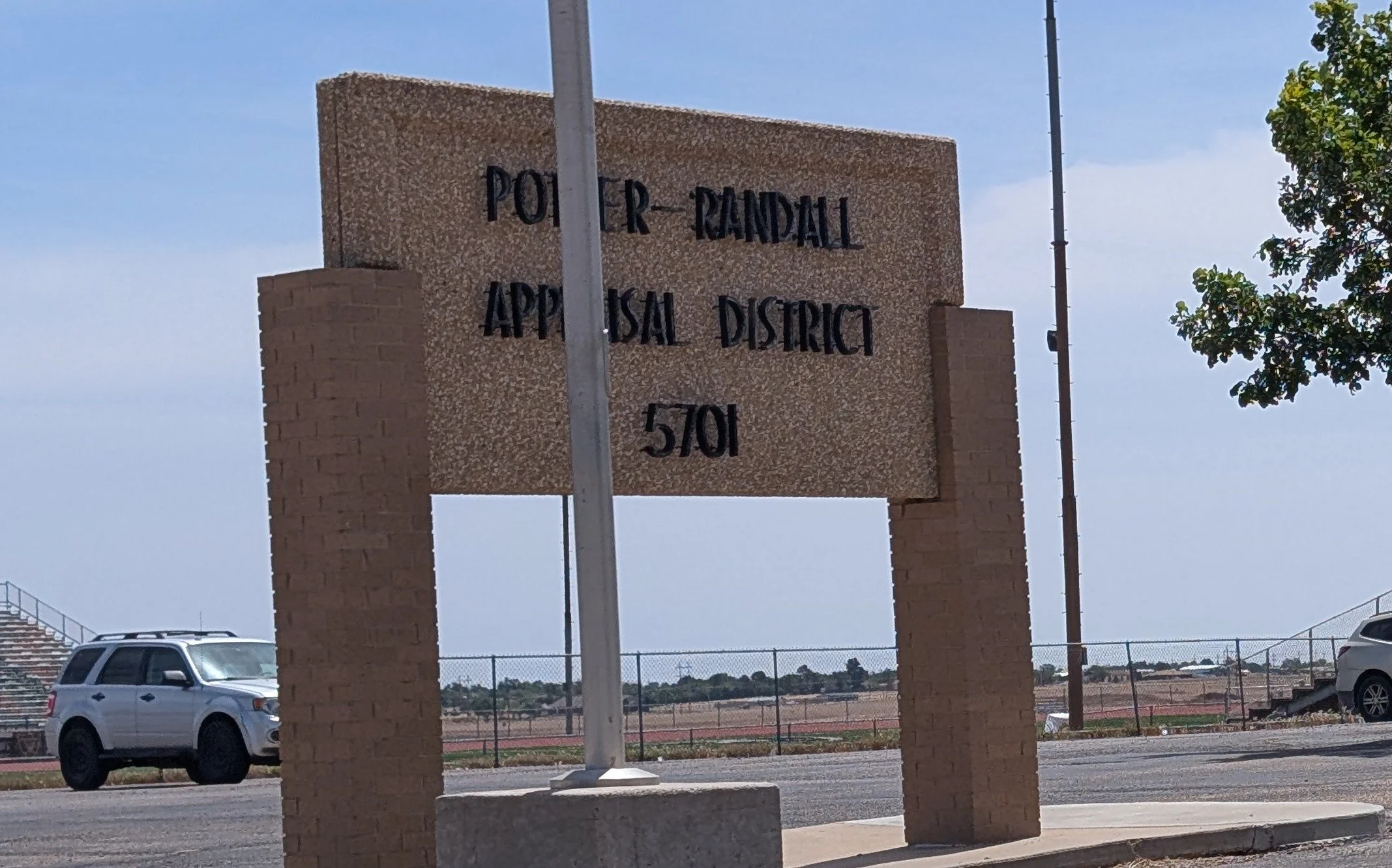
Photo by Pioneer Staff
By Jack Klaus, Randall County Appraisal District Board Member (in his individual capacity)
The Potter and Randall appraisal district boards are considering an important question: how to replace or revise the 1987 agreement in a way that gives both counties meaningful authority while preserving an effective shared operation.
That discussion will benefit from a culture in which differing strategies can be examined without being mistaken for differing objectives. Recent reporting by The Amarillo Pioneer provides an opportunity to clarify my position and explain why I believe that distinction matters.
I support correcting the agreement, involving legal counsel and ensuring the resulting structure complies with the law. The question is not whether to pursue those objectives, but how best to reach them.
From my conversations with members of both boards, I believe the primary objectives are broadly shared: equitable authority, legal compliance and an efficient shared operation. The differences appear to concern strategy and tactics.
Different strategies, not different goals
It is my understanding that Thomas Warren III has advocated retaining counsel and routing communication between the boards through attorneys. This appears to be the path the Potter County Appraisal District board is now pursuing. At the June 23 Randall County Appraisal District board meeting, I recommended a different strategy for consideration.
I proposed that both boards first meet and work together to identify shared objectives and develop a scope of work for their attorneys. Counsel would then incorporate the boards’ decisions into an enforceable legal agreement.
My concern was not with attorneys participating, but with the role they would perform and the sequence of the work. Based on my experience, beginning with joint discussion offered a greater likelihood of efficiently producing an agreement both boards could support.
The Amarillo Pioneer reported that I opposed bringing attorneys into the process. It also reported that I contend the current agreement is lawful and that the Randall board voted not to hire an attorney.
The meeting recording provides important context that may help explain the difference between my position and how it was described.
I expressly said the boards’ work should be given to attorneys to ensure that it complied with the law. I did not declare the current agreement lawful or illegal. I questioned whether the Potter County tax assessor-collector’s opinion that the agreement is illegal had been established. Questioning whether an opinion has been adequately supported does not require accepting the opposite position.
The article correctly notes that the Randall board did not hire an attorney at that meeting. The fuller context is that Chair Jinger White was absent because of illness and the board deferred action until members could receive her report concerning the attorneys she had contacted.
Taken together, this context presents a substantially different position from the one the article may have left readers with. That distinction matters beyond correcting the record. When a difference in strategy is interpreted as opposition to the objective, useful alternatives become harder to evaluate and the trust needed to reach an agreement can suffer.
Working together rather than in isolation
Events have progressed since I offered my recommendation. The Potter County Appraisal District board has retained counsel. It appears that a proposed contract is being developed on the Potter County Appraisal District board’s behalf without first receiving input from Randall board members. The process I previously recommended may no longer be available in the same form.
I am not suggesting that the Potter County Appraisal District board reverse course or discard completed work. I believe the current path can still produce a new agreement, and probably will. My concern is that it appears the current path requires each board to guess what the other will accept, turns ordinary policy discussions into negotiations between lawyers and makes the first formal proposal more difficult to change. Those hurdles add time, expense, and unnecessary friction to a process already marked by unnecessary friction.
My understanding is that the boards are not meeting together because the existing agreement has been described by some as illegal and the matter as being in a “pre-litigation” phase. If those premises are the basis for limiting communication, the boards should first utilize counsel to determine whether the existing agreement is unlawful and whether that conclusion requires the boards to work separately.
Those are distinct questions. If direct communication creates legal risk, counsel can explain it and recommend joint meetings with attorneys present, communication through designated representatives or another process, such as the path Potter is currently pursuing.
If isolation is not required, continuing it makes reaching the shared objective less efficient, less likely and more expensive.
The question of how a new agreement might address future deadlocks illustrates the procedural problem. There appears to be agreement that a new contract needs a mechanism for resolving impasses, but the design has not been discussed between the boards. Under the current process, one board may receive a deadlock provision it cannot accept. An alternative must then travel back through counsel, creating a costly process for comparing ideas that board members must ultimately evaluate and approve.
How an alternative is received creates another concern. An alternative may be interpreted as an attempt to gain advantage or obstruct parity, hardening positions before the idea is evaluated on its merits. Board members should be able to compare mechanisms, perform their due diligence and vote for the approach they find most workable without having unsupported motives attributed to them for proposing an alternative.
Direct discussion would not guarantee agreement, but it would allow members to explain the concern a provision is intended to address, understand why the other board may object, and consider whether a different mechanism could accomplish the shared purpose. It would also allow both boards to give counsel clearer, jointly informed direction.
The objective remains within reach
Any proposed agreement should give both counties meaningful and equitable authority, comply with the law, protect each appraisal district’s statutory responsibilities, and provide a dependable method for resolving future disagreements. It should preserve the benefits of the shared operation without allowing either board to dominate or disable the other.
I have not committed myself to one governance structure or one path forward. I want both boards to have enough space and accurate information to evaluate the alternatives.
The current path that the Potter County Appraisal District board is pursuing can succeed. My experience simply tells me that it presents avoidable hurdles to success and may rest on premises that have not yet been established for both boards. Recognizing those concerns is not an argument against parity or a prediction of failure. It is an effort to improve the probability of reaching the objective we share.
Both boards appear to agree on the need for parity, legality, and a workable shared operation. We need a process that permits questions without treating them as opposition, allows alternatives without assigning intent, and gives both boards a meaningful role in shaping the result. Differing strategies do not have to divide us. Properly considered, they can help us produce a stronger agreement.