
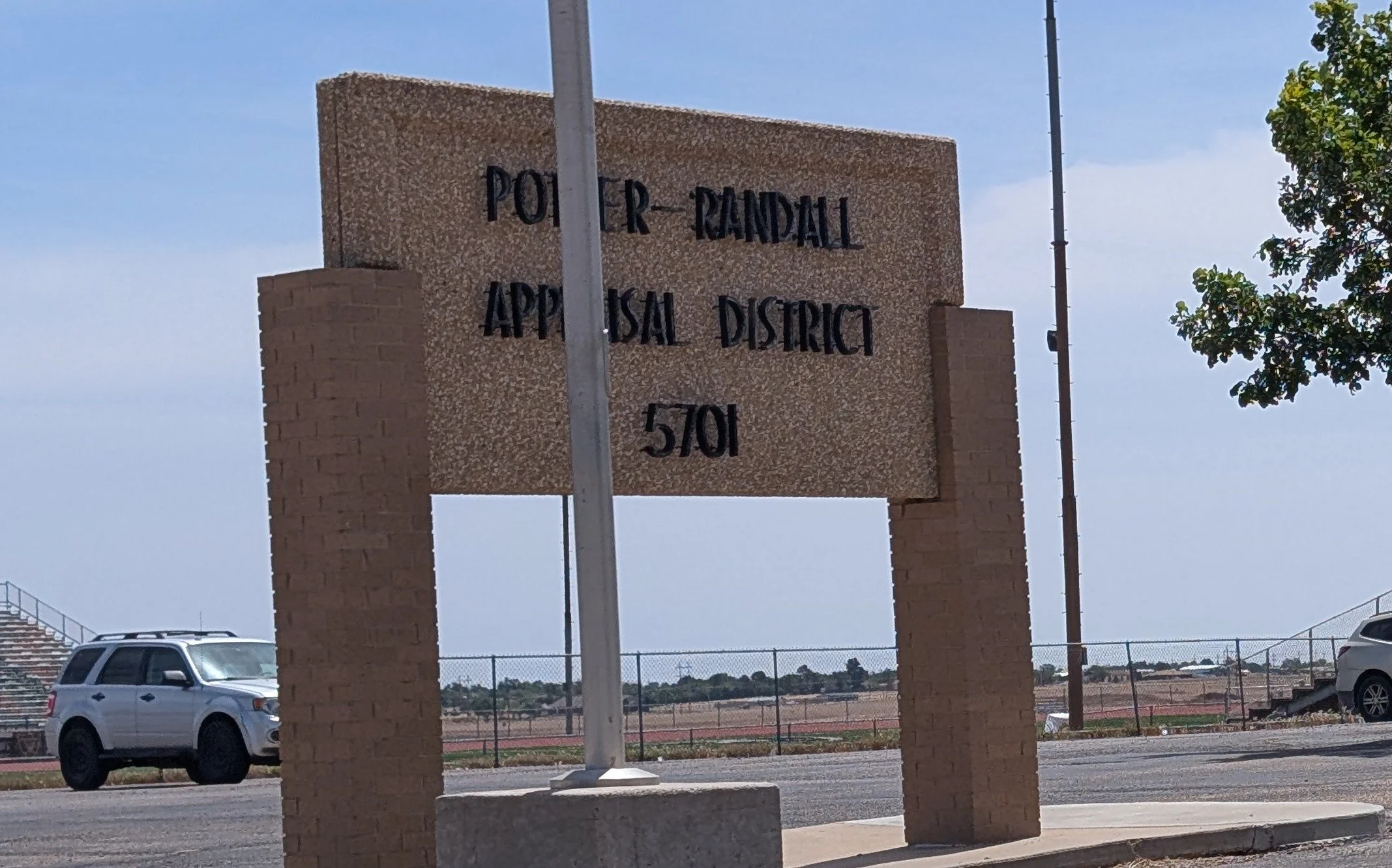
Photo by Pioneer Staff
By Nick Self, freelance reporter for The Amarillo Pioneer
Following last month’s heated discussion over an outdated 1987 contract, the Potter-Randall Appraisal District (PRAD) boards are gearing up for separate meetings next week to address the controversial agreement that has left Potter County with little formal voting power.
According to the posted agendas, both Potter and Randall County boards will meet on Tuesday at the PRAD office, but at different times. Randall County’s board is scheduled to meet at 8:30 a.m., while Potter County’s board will convene at 2:00 p.m. The separation comes as the district continues to face internal tension and growing external pressure from local residents questioning the fairness of the long-standing contract.
Both boards will once again discuss the 1987 agreement that, as previously reported, gives Randall County the sole vote on most policy matters while Potter County is largely limited to a consulting role. A key action item on the agendas gives members from both counties the opportunity to vote on seeking outside legal counsel specifically to help amend the contract.
Aside from that and a couple of routine appointment items — including filling a vacancy on the Potter County board and appointing someone to a seat on the Potter Appraisal Review Board — there are no other action items listed. Notably, the boards will not be taking up the previously tabled items related to recording board meetings or selecting auditing services for the district.
The push to bring in independent legal help arrives as PRAD deals with an internal struggle and outside criticism, particularly from the local Facebook group Take It in the Gas, which has spotlighted how Potter County taxpayers help fund the district but have limited say in its operations.
As Chief Appraiser Jeffrey Dagley explained in the last meeting, while custom has allowed Potter County a non-binding vote after Randall County decides, the actual contract language heavily favors Randall County on day-to-day policy decisions.
With the boards meeting separately, it remains to be seen how each side will approach potential changes to the contract and whether they can reach any agreement on next steps. Questions also linger about what would happen if the two counties end up at odds over proposed amendments.
Many in the community are watching closely to see if this round of meetings will lead to meaningful progress toward updating the 37-year-old contract or if the power imbalance will remain in place.
This story will be updated following Tuesday’s meetings.